

Hey there! As a ceramic resonator supplier, I often get asked if ceramic resonators can be used in GPS devices. Well, let's dive right into this topic and find out.
First off, let's understand what a GPS device does. GPS, or Global Positioning System, is all about figuring out your exact location on Earth. It works by communicating with a network of satellites orbiting our planet. These satellites send out signals, and your GPS device receives them. By calculating the time it takes for these signals to reach the device, it can pinpoint your location.
Now, where do ceramic resonators come into play? In any electronic device, including GPS devices, accurate timing is crucial. That's where resonators come in. They generate a stable frequency that helps the device keep track of time and perform various functions correctly.
Ceramic resonators are a popular choice for many electronic applications because they're relatively inexpensive, small in size, and reliable. But can they cut it in GPS devices?
One of the main requirements for a resonator in a GPS device is high stability. The frequency it generates needs to stay pretty much the same over time and under different environmental conditions. Temperature changes, for example, can have a big impact on the frequency of a resonator. If the frequency drifts too much, it can throw off the timing calculations in the GPS device, leading to inaccurate location readings.
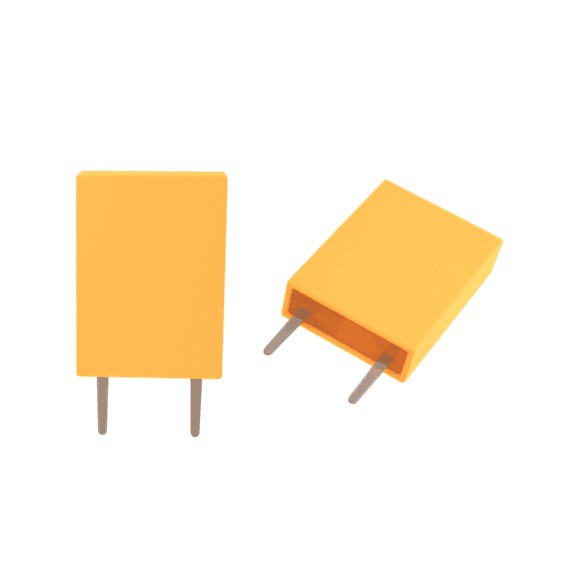
Some ceramic resonators are designed to have high stability. Take a look at our Ceramic Resonator with High Stability. These resonators are engineered to minimize frequency drift, even when the temperature fluctuates. They use special ceramic materials and manufacturing techniques to achieve this stability.
Another important factor is the size of the resonator. GPS devices are often designed to be compact and portable. So, the resonator needs to be small enough to fit inside the device without taking up too much space. That's where our Small Size SMD Ceramic Resonator HCTA comes in handy. It's a surface-mount device (SMD), which means it can be easily soldered onto a printed circuit board (PCB). This type of resonator is not only small but also easy to integrate into the GPS device's design.
In addition to size and stability, the cost is also a significant consideration. GPS devices are mass-produced, and manufacturers are always looking for ways to keep the production costs down. Ceramic resonators are generally more affordable compared to other types of resonators, like quartz crystals. This makes them an attractive option for GPS device manufacturers who want to offer their products at a competitive price.
However, it's important to note that while ceramic resonators have many advantages, they may not be suitable for all GPS applications. Some high-precision GPS devices, such as those used in scientific research or military applications, require extremely accurate timing. In these cases, quartz crystals might be a better choice because they offer even higher stability and precision.
But for most consumer-grade GPS devices, like those found in smartphones, car navigation systems, and fitness trackers, ceramic resonators can do the job just fine. They provide a good balance between cost, size, and performance.
Let's talk a bit more about the performance of ceramic resonators in GPS devices. The frequency accuracy of a resonator affects how well the GPS device can calculate your location. A more accurate frequency means more precise timing calculations, which in turn leads to more accurate location readings. Our SMD Ceramic Resonator HCTB1 is designed to have a high frequency accuracy, making it a great option for GPS applications.
It's also worth mentioning that ceramic resonators are relatively easy to use. They don't require any special handling or calibration procedures, which simplifies the manufacturing process for GPS device manufacturers. This can save time and money during production.
In conclusion, ceramic resonators can definitely be used in GPS devices. They offer a cost-effective, small-sized, and reliable solution for most consumer-grade GPS applications. However, for high-precision applications, other types of resonators might be more appropriate.
If you're a GPS device manufacturer or someone involved in the electronics industry and you're interested in using ceramic resonators in your products, we'd love to hear from you. We can provide you with high-quality ceramic resonators that meet your specific requirements. Just reach out to us to start a procurement discussion.

References
- "Fundamentals of GPS" by Bradford W. Parkinson, Per Enge, and James J. Spilker Jr.
- "Electronic Components: Theory and Practice" by John Malmstadt and John Enke.