

Hey there! As a supplier of clipped sine wave TCXOs (Temperature-Compensated Crystal Oscillators), I've seen firsthand how these nifty devices can sometimes play nice with other components, and other times, well, not so much. In this blog, I'm gonna dive into the compatibility issues that can pop up when using a clipped sine wave TCXO alongside other parts in a circuit.
First off, let's quickly talk about what a clipped sine wave TCXO is. It's a type of oscillator that generates a frequency signal. The "clipped sine wave" part means that the sine wave output is modified, usually to limit the peak voltage. This can be useful in a bunch of applications, like in mobile devices, where power efficiency and signal stability are key.
One of the main compatibility issues we often run into is with power supply components. TCXOs are pretty sensitive to voltage fluctuations. If the power supply has a lot of noise or ripple, it can mess with the TCXO's performance. For example, if the power supply voltage drops suddenly, the frequency output of the TCXO might shift. This is a big deal because in many applications, like communication systems, even a small frequency shift can lead to signal degradation or loss.
Another common problem is with the impedance matching between the TCXO and other components. The impedance of the TCXO needs to be properly matched with the impedance of the load it's connected to. If there's a mismatch, it can cause reflections in the signal, which can lead to signal distortion. This is especially important in high - frequency applications. For instance, in a radio frequency (RF) circuit, an impedance mismatch can reduce the efficiency of the signal transmission and reception.
When it comes to integration with other active components, such as microcontrollers or analog - to - digital converters (ADCs), timing is crucial. A clipped sine wave TCXO provides a stable clock signal, but if the timing of this signal doesn't align well with the operating cycles of these other components, it can lead to data errors. For example, if a microcontroller is expecting a clock signal at a certain rate and the TCXO's output is off even slightly, the microcontroller might misread data or perform incorrect operations.
Now, let's talk about the environment. TCXOs are designed to work within a certain temperature range. If they're used alongside components that generate a lot of heat, like power amplifiers, it can cause the TCXO to go out of its optimal operating temperature. This can result in frequency variations. In industrial applications, where there can be a wide range of temperatures, this is a significant concern.
Interference is another major compatibility issue. A clipped sine wave TCXO can generate electromagnetic interference (EMI), and it can also be affected by EMI from other components. For example, if there are high - speed digital circuits nearby, they can radiate EMI that can interfere with the TCXO's signal. On the other hand, the TCXO itself can radiate EMI that might cause problems for other sensitive components in the circuit.
So, what can we do to address these compatibility issues? Well, one solution is to use proper power filtering. Adding capacitors and inductors to the power supply can help reduce noise and ripple, ensuring a stable power supply for the TCXO. For impedance matching, we can use matching networks, such as LC circuits, to ensure that the impedance of the TCXO and the load are well - matched.

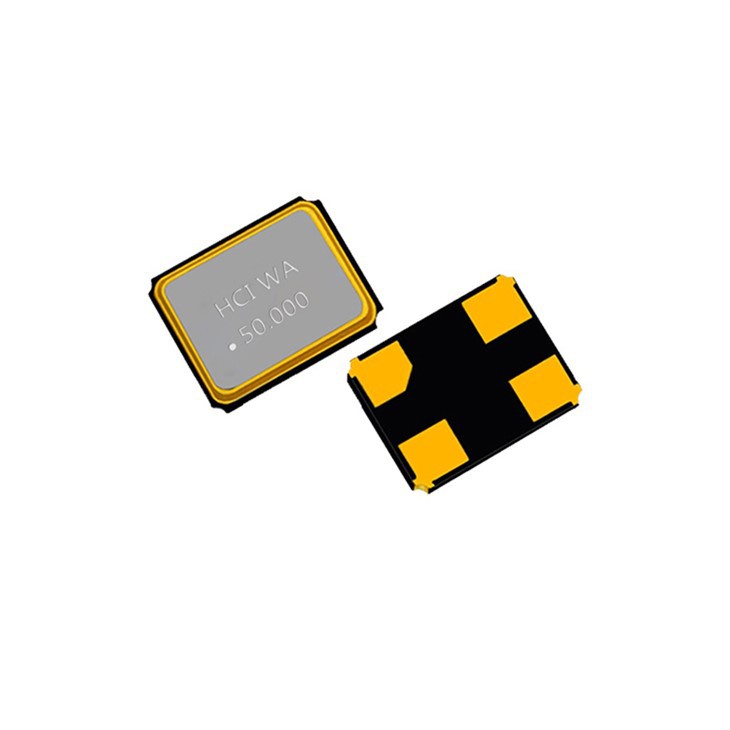
To deal with timing issues, we can use synchronization techniques. For example, we can use phase - locked loops (PLLs) to synchronize the TCXO's output with the operating cycles of other components. And to reduce interference, we can use shielding and proper grounding techniques.
At our company, we offer a range of clipped sine wave TCXOs that are designed to minimize these compatibility issues. For instance, we have the Low Power Quartz Oscillator TCXO 2016, which is great for applications where power efficiency is a priority. It's designed to work well with other components, even in low - power environments.
We also have the Industrial Temperature TCXOs 2520. These are built to withstand a wide range of temperatures, making them suitable for industrial applications where temperature variations can be a challenge.
And if you're looking for a more advanced option, our Clipped Sine VCTCXO Oscillator 7050 offers voltage - controlled frequency adjustment, which can be very useful in applications where you need to fine - tune the frequency output.
If you're facing compatibility issues with your current TCXOs or if you're looking for a reliable clipped sine wave TCXO for your new project, don't hesitate to reach out. We're here to help you find the right solution for your specific needs. Whether it's dealing with power supply issues, impedance matching, or interference, we've got the expertise and the products to make your circuit work smoothly.
In conclusion, while there are compatibility issues that can arise when using a clipped sine wave TCXO with other components, with the right design and the right products, these issues can be effectively managed. So, if you're in the market for a high - quality clipped sine wave TCXO, give us a shout, and let's discuss how we can work together to solve your problems.
References
- "Oscillator Design and Computer Simulation" by Sergio Franco
- "RF Circuit Design" by Chris Bowick