

In the field of radio frequency (RF) technology, surface acoustic wave (SAW) filters play a pivotal role in signal processing. Among the many important parameters associated with SAW filters, the cut - off frequency stands out as a crucial characteristic. As a leading SAW filter supplier, I am here to delve into the concept of the cut - off frequency of SAW filters, its significance, and how it relates to our product offerings.
Understanding the Basics of SAW Filters
Before we jump into the cut - off frequency, let's briefly recap what SAW filters are. SAW filters are electronic devices that utilize surface acoustic waves to filter electrical signals. These waves propagate along the surface of a piezoelectric substrate, such as quartz or lithium niobate. When an electrical signal is applied to an input interdigital transducer (IDT) on the substrate, it is converted into a surface acoustic wave. This wave then travels across the substrate and is reconverted into an electrical signal by an output IDT. The design of the IDTs, including their finger spacing, number, and geometry, determines the filtering characteristics of the SAW filter.
Defining the Cut - off Frequency
The cut - off frequency of a SAW filter can be defined in different contexts, but generally, it refers to the frequency at which the filter's response starts to deviate significantly from its passband behavior. In a low - pass SAW filter, the cut - off frequency ($f_c$) is the frequency above which the filter begins to attenuate the signal. For a high - pass filter, it is the frequency below which attenuation occurs. In a band - pass filter, there are two cut - off frequencies: the lower cut - off frequency ($f_{c1}$) and the upper cut - off frequency ($f_{c2}$), which define the boundaries of the passband.
Mathematically, the cut - off frequency is often associated with a specific attenuation level, typically - 3 dB. At the - 3 dB cut - off frequency, the output power of the filter is half of the power in the passband. This point is also known as the half - power point. For example, if a low - pass SAW filter has a passband gain of 0 dB and starts to attenuate the signal, the frequency at which the gain drops to - 3 dB is considered the cut - off frequency.
Significance of the Cut - off Frequency
The cut - off frequency is of paramount importance in SAW filter applications for several reasons.
Signal Selection
In communication systems, SAW filters are used to select specific frequency bands while rejecting unwanted frequencies. The cut - off frequency determines which frequencies are allowed to pass through the filter and which are blocked. For instance, in a wireless communication device, a SAW filter with a well - defined cut - off frequency can isolate the desired communication channel from adjacent channels, reducing interference and improving signal quality.
System Performance
The cut - off frequency also affects the overall performance of the system in which the SAW filter is used. In a radar system, the cut - off frequency of the SAW filter can impact the range resolution and the ability to detect small targets. A filter with a precise cut - off frequency can enhance the signal - to - noise ratio (SNR) of the system, leading to more accurate detection and measurement.
Design Flexibility
For filter designers, the cut - off frequency is a key parameter in the design process. By adjusting the physical dimensions and layout of the IDTs, designers can control the cut - off frequency of the SAW filter. This allows for the customization of filters to meet the specific requirements of different applications, such as different frequency bands, bandwidths, and attenuation levels.

Factors Affecting the Cut - off Frequency
Several factors can affect the cut - off frequency of a SAW filter.
Substrate Material
The choice of substrate material has a significant impact on the cut - off frequency. Different piezoelectric materials have different acoustic velocities, which in turn affect the propagation speed of the surface acoustic waves. For example, lithium niobate has a higher acoustic velocity than quartz. A SAW filter fabricated on a lithium niobate substrate will generally have a higher cut - off frequency compared to a similar filter on a quartz substrate, all other factors being equal.
IDT Design
The design of the interdigital transducers, including the finger spacing, number of fingers, and finger width, plays a crucial role in determining the cut - off frequency. The finger spacing is inversely proportional to the cut - off frequency. A smaller finger spacing results in a higher cut - off frequency, as the shorter wavelength of the surface acoustic wave associated with the smaller spacing corresponds to a higher frequency.
Temperature
Temperature can also affect the cut - off frequency of a SAW filter. Changes in temperature can cause variations in the substrate material's properties, such as its acoustic velocity. These variations can lead to shifts in the cut - off frequency. To mitigate this effect, temperature - compensated SAW filters are often used, which incorporate additional features or materials to reduce the temperature dependence of the cut - off frequency.
Our SAW Filter Product Offerings and Cut - off Frequencies
As a SAW filter supplier, we offer a wide range of SAW filters with different cut - off frequencies to meet the diverse needs of our customers.
Wideband SAW Filter 3.8x3.8mm
Our wideband SAW filter with a 3.8x3.8mm package is designed for applications that require a relatively wide passband. The cut - off frequencies of this filter can be customized within a certain range to suit different frequency bands. It is commonly used in wireless communication systems, such as Wi - Fi and Bluetooth, where wideband signal processing is necessary.
SMD Low Pass SAW Filter 1.1x0.9x0.5
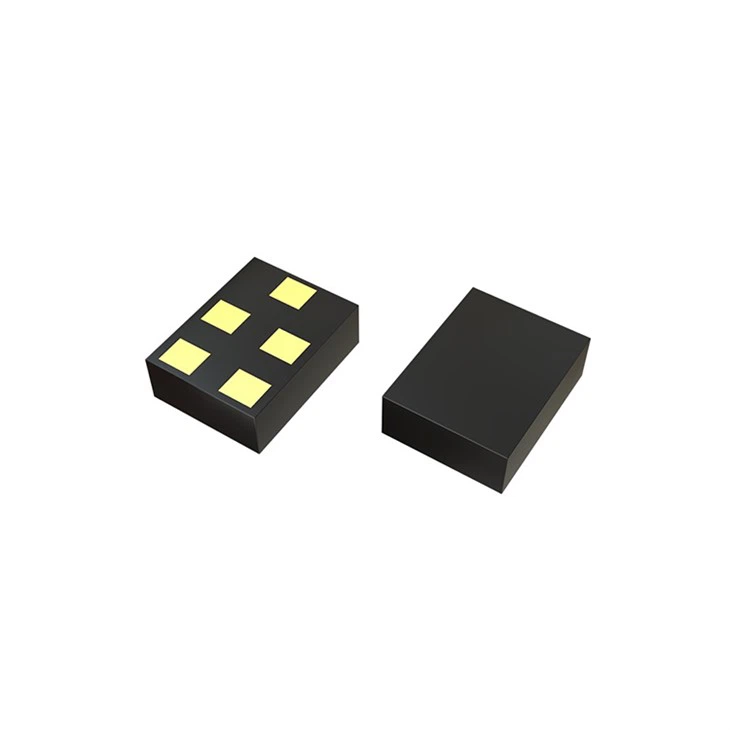
The SMD low - pass SAW filter with dimensions of 1.1x0.9x0.5 is ideal for applications where low - frequency signals need to be passed while high - frequency noise is rejected. The cut - off frequency of this filter can be precisely controlled during the manufacturing process, ensuring accurate filtering performance. It is often used in audio and video signal processing circuits.
DIP 3PIN SAW Filter 8.4 X 3.5 X 2.9
Our DIP 3PIN SAW filter with dimensions of 8.4 X 3.5 X 2.9 is suitable for applications where through - hole mounting is preferred. This filter can be designed with different cut - off frequencies to meet the requirements of various radio frequency systems, such as radio receivers and transmitters.
The Process of Selecting the Right Cut - off Frequency
When selecting a SAW filter for a particular application, choosing the appropriate cut - off frequency is crucial. Here are some steps to guide the selection process:
Identify the Application Requirements
First, clearly define the requirements of the application. Determine the frequency band of the desired signal, the level of attenuation required for unwanted frequencies, and the bandwidth needed. For example, if you are designing a cellular phone receiver, you need to know the frequency band of the cellular network and the adjacent channel rejection requirements.
Consider the Operating Environment
The operating environment can also affect the performance of the SAW filter. If the application is in a high - temperature or high - humidity environment, you need to choose a filter with good temperature and humidity stability. The cut - off frequency of the filter should remain relatively constant under these conditions.
Evaluate the Trade - offs
There are often trade - offs between different filter parameters, such as cut - off frequency, bandwidth, and insertion loss. A filter with a very sharp cut - off frequency may have a higher insertion loss, which can reduce the signal strength. You need to evaluate these trade - offs based on the specific requirements of your application.
Contact Us for SAW Filter Procurement
If you are in the market for high - quality SAW filters with precisely controlled cut - off frequencies, we are here to help. Our team of experts can work with you to understand your specific requirements and recommend the most suitable SAW filters for your application. Whether you need a standard product or a customized solution, we have the capabilities to meet your needs. Contact us today to initiate a discussion about your SAW filter procurement and start our cooperation.
References
- IEEE Transactions on Ultrasonics, Ferroelectrics, and Frequency Control.
- "Surface Acoustic Wave Devices and Their Signal Processing Applications" by H. F. Tiersten.