

Hey there! I'm a supplier of clipped sine wave TCXOs, and today I want to dig into a crucial topic: What is the frequency locking time of a clipped sine wave TCXO?
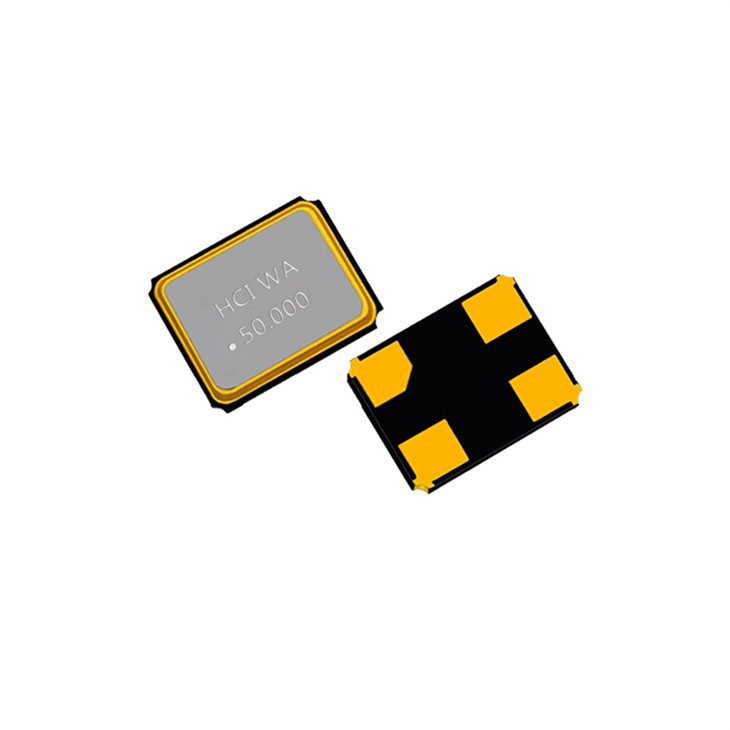
Before we jump right into the frequency locking time, let's have a quick rundown of what a clipped sine wave TCXO is. A TCXO, or Temperature - Compensated Crystal Oscillator, is a type of oscillator that adjusts for temperature changes to keep a stable frequency output. The "clipped sine wave" part refers to the way the output signal is shaped. In a clipped sine wave TCXO, the sine - wave output is "clipped" at certain voltage levels. This gives a more square - like appearance to the output compared to a pure sine wave.
The frequency locking time of a TCXO is the time it takes for the oscillator to reach and maintain a specified frequency accuracy after it's powered on or after a significant change in operating conditions, like temperature or voltage. It's a vital parameter because in many applications, you need the oscillator to start producing an accurate frequency as fast as possible.
Factors Affecting Frequency Locking Time
There are several factors that can influence the frequency locking time of a clipped sine wave TCXO.

Temperature
Temperature plays a huge role. When the temperature changes, the crystal inside the TCXO expands or contracts. This physical change affects the resonant frequency of the crystal. A clipped sine wave TCXO has a temperature compensation circuit that tries to counteract these frequency shifts. But when there's a sudden temperature change, it takes time for the compensation circuit to adjust and bring the output frequency back to the desired value. For instance, if you move a TCXO from a cold environment to a warm one, the crystal will start to expand, and the frequency will shift. The compensation circuit then needs to make corrections, and this process takes time, thus increasing the frequency locking time.
Initial Frequency Offset
The initial frequency deviation from the target frequency when the oscillator is powered on is also important. If the TCXO starts far from the desired frequency, it will take longer for it to lock onto the correct frequency. This initial offset can be caused by various factors, like manufacturing tolerances or the previous operating conditions.
Circuit Design
The design of the compensation circuit in the TCXO can significantly impact the frequency locking time. A well - designed circuit can quickly detect frequency deviations and make the necessary adjustments. On the other hand, a poorly designed circuit may be slow to respond, leading to a longer locking time. Advanced compensation algorithms and high - performance components can help reduce the locking time.
Measuring the Frequency Locking Time
To measure the frequency locking time of a clipped sine wave TCXO, you'll typically use a frequency counter. First, you power on the TCXO and start the frequency counter simultaneously. The frequency counter records the frequency of the TCXO output over time.
You define an acceptable frequency accuracy range, say ±1 ppm (parts per million). The frequency locking time is then the time it takes for the output frequency to enter and stay within this specified accuracy range. For example, if you power on the TCXO and it takes 200 milliseconds for the frequency to get within ±1 ppm of the target frequency and remain there, then the frequency locking time is 200 ms.
Importance of Frequency Locking Time in Different Applications
Wireless Communication
In wireless communication systems like smartphones and Wi - Fi routers, fast frequency locking is essential. When a device powers on or switches frequency channels, it needs to quickly establish a stable frequency for reliable communication. A long frequency locking time can lead to dropped calls, slow data transfer speeds, or even complete communication failure.
Navigation Systems
GPS and other navigation systems rely on accurate frequency sources. A TCXO with a short frequency locking time ensures that the navigation system can quickly acquire satellite signals and provide accurate positioning information. If the frequency locking is slow, it may take longer for the system to lock onto satellites, causing delays in getting accurate location data.
Our Clipped Sine Wave TCXO Products
As a supplier of clipped sine wave TCXOs, we offer a range of products with excellent frequency locking performance.
We have the Low Power Quartz Oscillator TCXO 2016. This one is ideal for battery - powered devices where low power consumption is a key concern. Despite its low - power design, it has a relatively short frequency locking time, so you don't have to wait long for it to provide a stable frequency.
The Industrial Temperature TCXOs 2520 is built to withstand harsh industrial environments with wide temperature variations. It's designed with a robust compensation circuit that can quickly adapt to temperature changes, resulting in a fast frequency locking time even under challenging conditions.
And then there's the Clipped Sine Wave TCXOs 7050 10 Pins. This product offers high - precision frequency output and a short frequency locking time. It's suitable for applications that require both accuracy and quick frequency establishment.
Conclusion
The frequency locking time of a clipped sine wave TCXO is a critical parameter that affects its performance in various applications. Understanding the factors that influence it and how to measure it can help you choose the right TCXO for your needs.
If you're in the market for high - quality clipped sine wave TCXOs with excellent frequency locking performance, we'd love to hear from you. Whether you're working on a wireless communication project, a navigation system, or any other application that requires a stable frequency source, we have the products to meet your requirements. Reach out to us to start a discussion about your needs and find the perfect TCXO solution for you.
References
- IEEE Transactions on Ultrasonics, Ferroelectrics, and Frequency Control. Papers related to crystal oscillator design and frequency stability.
- Manufacturer datasheets of TCXOs, which often contain information on frequency locking time and other performance parameters.