

In the world of electronic components, Temperature-Compensated Crystal Oscillators (TCXOs) play a crucial role, especially those with clipped sine waves. As a supplier of clipped sine wave TCXOs, I've witnessed firsthand the importance of frequency stability, particularly during power fluctuations. In this blog, we'll delve into the intricacies of frequency stability in clipped sine wave TCXOs under power fluctuations, exploring the factors at play and the implications for various applications.
Understanding Clipped Sine Wave TCXOs
Before we dive into frequency stability during power fluctuations, let's briefly understand what clipped sine wave TCXOs are. A TCXO is designed to compensate for the frequency variations caused by temperature changes in a crystal oscillator. The "clipped sine wave" refers to a waveform that has been modified from a pure sine wave by "clipping" off the peaks and troughs beyond a certain amplitude limit.
Clipped sine wave TCXOs offer several advantages, such as reduced power consumption and lower electromagnetic interference (EMI) compared to other types of oscillators. They are commonly used in applications where space, power efficiency, and EMI control are critical, such as in mobile devices, wireless communication systems, and IoT devices.
Frequency Stability: A Fundamental Requirement
Frequency stability is a measure of how well an oscillator maintains a constant output frequency over time and under varying operating conditions. In the case of clipped sine wave TCXOs, maintaining frequency stability is of utmost importance, as even small deviations can have significant impacts on the performance of the systems they are integrated into.
For example, in wireless communication systems, frequency instability can lead to signal degradation, reduced data transfer rates, and increased bit error rates. In IoT devices, inaccurate frequency output can disrupt communication protocols and lead to unreliable data transmission. Therefore, ensuring high frequency stability is essential for the proper functioning of these applications.
Power Fluctuations and Their Impact on Frequency Stability
Power fluctuations are a common occurrence in electronic systems, and they can have a significant impact on the frequency stability of clipped sine wave TCXOs. There are several ways in which power fluctuations can affect the oscillator's performance:
Voltage Variations
Power fluctuations often manifest as voltage variations. When the supply voltage to a clipped sine wave TCXO changes, it can cause changes in the operating conditions of the oscillator circuit. These changes can, in turn, affect the frequency output of the oscillator.
For instance, an increase in supply voltage can lead to an increase in the current flowing through the oscillator circuit, which can cause the crystal to vibrate at a slightly different frequency. Similarly, a decrease in supply voltage can have the opposite effect. These frequency changes can be significant, especially in applications where high precision is required.
Thermal Effects
Power fluctuations can also cause thermal effects in the oscillator circuit. When the supply voltage changes, the power dissipated in the circuit components also changes, which can lead to temperature variations. Since the frequency of a crystal oscillator is temperature-dependent, these temperature changes can cause frequency shifts.

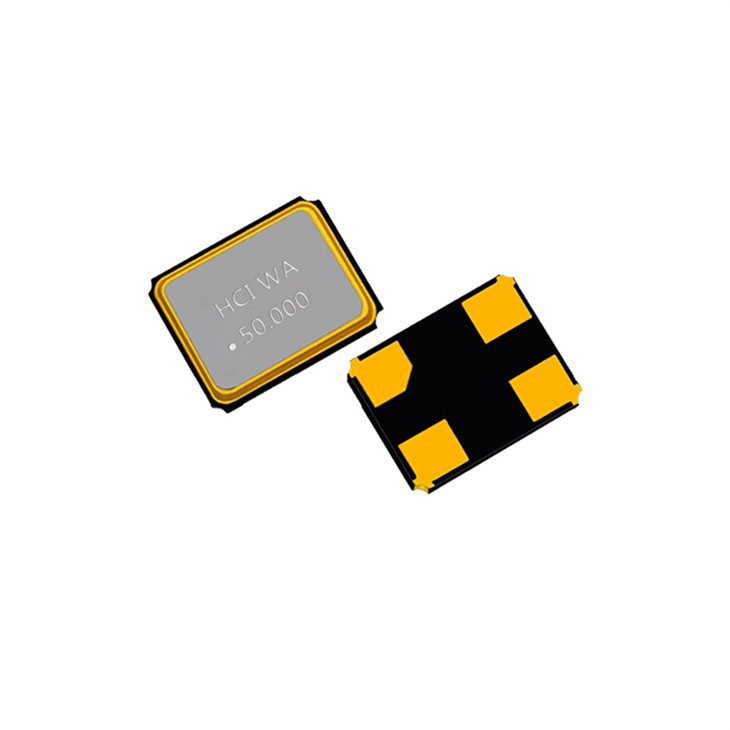
Moreover, the thermal time constant of the oscillator circuit can also play a role. If the power fluctuations are rapid, the temperature of the circuit may not have enough time to stabilize, leading to continuous frequency variations.
Nonlinear Effects
The oscillator circuit in a clipped sine wave TCXO is a nonlinear system. Power fluctuations can introduce nonlinear effects, such as harmonic distortion and intermodulation products. These nonlinear effects can further degrade the frequency stability of the oscillator.
For example, when the supply voltage changes, the nonlinear elements in the oscillator circuit may respond in a non - linear manner, causing the output frequency to deviate from its nominal value. These nonlinear effects can be difficult to predict and compensate for, making it challenging to maintain frequency stability under power fluctuations.
Mitigating the Impact of Power Fluctuations
As a supplier of clipped sine wave TCXOs, we understand the importance of mitigating the impact of power fluctuations on frequency stability. Here are some of the strategies we employ:
Power Supply Regulation
One of the most effective ways to reduce the impact of power fluctuations is to use a well - regulated power supply. A regulated power supply can maintain a constant output voltage, even when the input voltage varies. This helps to ensure that the operating conditions of the oscillator circuit remain stable, reducing the likelihood of frequency variations.
We recommend using low - dropout (LDO) regulators or switching regulators with high - quality voltage regulation for powering our clipped sine wave TCXOs. These regulators can provide a stable voltage output, minimizing the impact of power fluctuations on the oscillator's frequency stability.
Thermal Management
Proper thermal management is also crucial for maintaining frequency stability under power fluctuations. We design our clipped sine wave TCXOs with efficient heat dissipation mechanisms to minimize the thermal effects of power fluctuations.
For example, we use high - thermal - conductivity materials in the oscillator package to transfer heat away from the circuit components. We also optimize the layout of the circuit to reduce the temperature gradients within the oscillator, ensuring that the crystal operates at a more uniform temperature.
Circuit Design Optimization
Our engineering team focuses on optimizing the circuit design of our clipped sine wave TCXOs to improve their resilience to power fluctuations. We use advanced simulation tools to analyze the behavior of the oscillator circuit under different power conditions and make design adjustments accordingly.
For instance, we may incorporate additional filtering components in the power supply lines to reduce the impact of voltage spikes and noise. We also optimize the biasing circuits of the oscillator to ensure that the circuit operates in a stable region, even when the supply voltage changes.
Our Product Portfolio
At our company, we offer a wide range of clipped sine wave TCXOs to meet the diverse needs of our customers. Some of our popular products include:
- High - Precision VCTCXO Oscillator Sine Wave 3225: This product offers high frequency stability and low phase noise, making it suitable for applications that require precise frequency control.
- Clipped Sine VCTCXO Oscillator 7050: With its large package size, this oscillator provides excellent thermal performance and is ideal for applications where high power handling and stability are required.
- Industrial Temperature TCXOs 2520: These TCXOs are designed to operate in harsh industrial environments, offering high frequency stability over a wide temperature range.
Contact Us for Procurement and Consultation
If you are in need of high - quality clipped sine wave TCXOs with excellent frequency stability during power fluctuations, we invite you to contact us for procurement and consultation. Our team of experts is ready to assist you in selecting the right product for your specific application requirements. Whether you are a large - scale manufacturer or a small - scale startup, we can provide you with the best solutions and support.
References
- Van der Ziel, A. (1970). Noise in solid - state devices and circuits. Wiley - Interscience.
- Matthaei, G. L., Young, L., & Jones, E. M. T. (1964). Microwave filters, impedance - matching networks, and coupling structures. McGraw - Hill.
- Kroupa, G. (2001). Crystal oscillator design and temperature compensation. Newnes.