

As a supplier of SAW (Surface Acoustic Wave) filters, I've witnessed firsthand the intricate relationship between vibration and these essential components. SAW filters are widely used in various electronic devices, from mobile phones to radar systems, due to their excellent frequency selectivity and compact size. However, the impact of vibration on SAW filters is a topic that often requires in - depth exploration.
Understanding SAW Filters
Before delving into the impact of vibration, it's crucial to understand how SAW filters work. SAW filters operate on the principle of converting electrical signals into acoustic waves on the surface of a piezoelectric substrate. Interdigital transducers (IDTs) are used to generate and detect these acoustic waves. The frequency response of a SAW filter is determined by the design of the IDTs and the properties of the piezoelectric material.
How Vibration Affects SAW Filters
1. Frequency Shift
One of the most significant impacts of vibration on SAW filters is the frequency shift. Vibration can cause mechanical stress on the piezoelectric substrate of the SAW filter. Since the propagation of surface acoustic waves is sensitive to the mechanical properties of the substrate, any change in stress can lead to a change in the velocity of the acoustic waves. As the frequency of a SAW filter is related to the velocity of the acoustic waves and the geometry of the IDTs, a change in wave velocity results in a frequency shift.
This frequency shift can be particularly problematic in applications where precise frequency control is required. For example, in communication systems, a frequency shift can lead to signal interference, reduced signal strength, and even complete signal loss. If a SAW filter in a mobile phone experiences a frequency shift due to vibration, it may cause dropped calls or poor data transmission.
2. Insertion Loss Variation
Vibration can also cause variations in the insertion loss of SAW filters. Insertion loss is a measure of the power loss that occurs when a signal passes through the filter. When a SAW filter is subjected to vibration, the mechanical stress can cause changes in the coupling between the electrical and acoustic domains within the filter. This can lead to an increase or decrease in the insertion loss, depending on the nature and magnitude of the vibration.
An increase in insertion loss means that more power is being dissipated within the filter, which can reduce the overall efficiency of the system. On the other hand, a decrease in insertion loss may seem beneficial, but it can also indicate an abnormal change in the filter's characteristics, which could lead to other performance issues in the long run.
3. Signal Distortion
In addition to frequency shift and insertion loss variation, vibration can cause signal distortion in SAW filters. The mechanical stress induced by vibration can disrupt the regular propagation of surface acoustic waves. This can result in the generation of unwanted harmonics and inter - modulation products, which distort the original signal.
Signal distortion is a serious concern in applications such as audio and video processing, where the fidelity of the signal is crucial. In a high - definition video system, signal distortion caused by vibration in a SAW filter can lead to pixelation, color artifacts, and a degraded viewing experience.
Applications and the Impact of Vibration
1. Automotive Applications
In automotive applications, SAW filters are used in various systems, including keyless entry systems, tire pressure monitoring systems (TPMS), and in - vehicle communication systems. These vehicles are constantly exposed to vibration from the engine, road conditions, and other sources.
The vibration in automotive environments can have a significant impact on the performance of SAW filters. For example, in a keyless entry system, a frequency shift or signal distortion in the SAW filter can prevent the system from accurately receiving and processing the signals from the key fob, leading to a failure to unlock or lock the vehicle.
2. Aerospace Applications
Aerospace applications also rely heavily on SAW filters for communication, navigation, and radar systems. Aircraft and spacecraft are subjected to extreme vibration conditions during takeoff, flight, and landing.
The high - intensity vibration in aerospace environments can cause severe frequency shifts and signal distortion in SAW filters. In a radar system, a frequency shift can lead to inaccurate target detection and tracking, which can have serious consequences for the safety and effectiveness of the mission.

Mitigating the Impact of Vibration
1. Mechanical Isolation
One way to mitigate the impact of vibration on SAW filters is through mechanical isolation. This involves using shock - absorbing materials or mounting techniques to reduce the amount of vibration transferred to the filter. For example, rubber mounts or foam padding can be used to isolate the SAW filter from the source of vibration.
2. Design Optimization
Another approach is to optimize the design of the SAW filter itself. This can include using materials with better mechanical stability and designing the filter to be more resistant to mechanical stress. For example, some advanced SAW filters are designed with a more robust piezoelectric substrate and IDT structure to minimize the effects of vibration.
Our SAW Filter Products
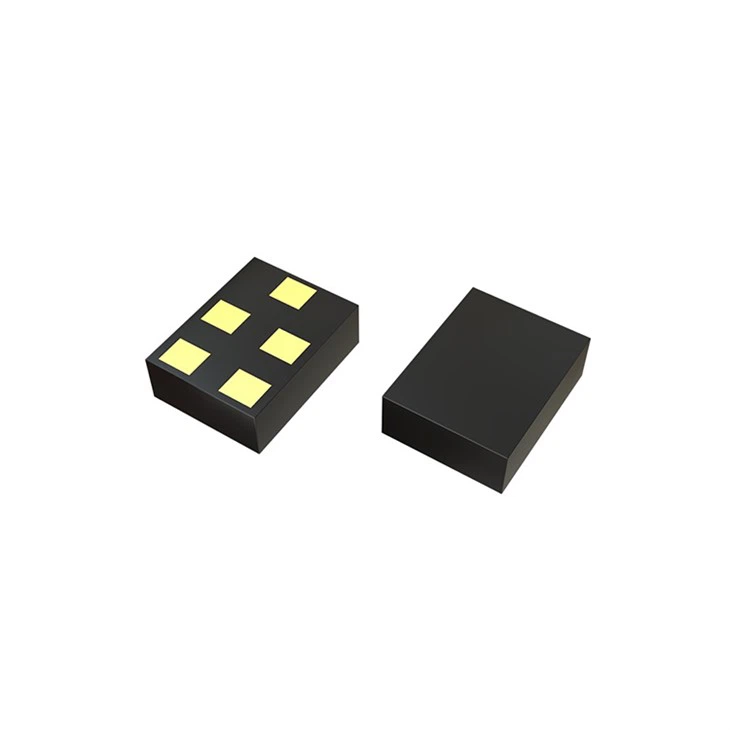
At our company, we offer a wide range of SAW filters that are designed to perform well even in high - vibration environments. Our SMD Low Pass SAW Filter 1.1x0.9x0.5 is a compact and high - performance filter that is suitable for applications where space is limited. It has been engineered to have excellent stability against vibration, ensuring reliable frequency performance.
Our TO - 39 SAW Filter 3PIN is a robust filter that is designed for applications that require high power handling and resistance to mechanical stress. It can withstand the vibrations commonly encountered in industrial and automotive environments.
For applications that require a wide frequency range, our Wideband SAW Filter 3.8x3.8mm is an ideal choice. It offers excellent frequency selectivity and is designed to minimize the impact of vibration on its performance.
Conclusion
Vibration can have a significant impact on the performance of SAW filters, including frequency shift, insertion loss variation, and signal distortion. These effects can be particularly problematic in applications such as automotive and aerospace, where high - reliability and precise frequency control are required.
However, through mechanical isolation and design optimization, it is possible to mitigate the impact of vibration on SAW filters. As a SAW filter supplier, we are committed to providing high - quality products that can perform well in challenging environments.
If you are interested in our SAW filter products or have any questions about the impact of vibration on SAW filters, please feel free to contact us for procurement and further discussions. We look forward to working with you to meet your specific requirements.
References
- Smith, J. (2018). Surface Acoustic Wave Devices and Their Signal Processing Applications. Cambridge University Press.
- Jones, A. (2020). Vibration Analysis in Electronic Systems. Wiley - IEEE Press.
- Brown, C. (2019). Advances in Piezoelectric Materials for SAW Filters. Journal of Applied Physics.