

As a leading supplier of ceramic resonators, I've seen firsthand the critical role these components play in a wide range of electronic devices. One of the most important characteristics of ceramic resonators is their impedance at different frequencies. In this blog post, I'll delve into the concept of impedance, how it varies with frequency in ceramic resonators, and why it matters for your electronic applications.
Understanding Impedance
Impedance is a measure of the opposition that a circuit presents to the flow of alternating current (AC). It combines the effects of resistance, inductance, and capacitance, and is represented as a complex number with a real part (resistance) and an imaginary part (reactance). In the context of ceramic resonators, impedance is a key parameter that affects their performance in electronic circuits.
The impedance of a ceramic resonator is frequency-dependent. At the resonant frequency, the impedance of the resonator reaches a minimum value, and the resonator exhibits maximum energy transfer. This is because at resonance, the inductive and capacitive reactances cancel each other out, leaving only the resistance. Away from the resonant frequency, the impedance increases, and the resonator becomes less efficient at transferring energy.
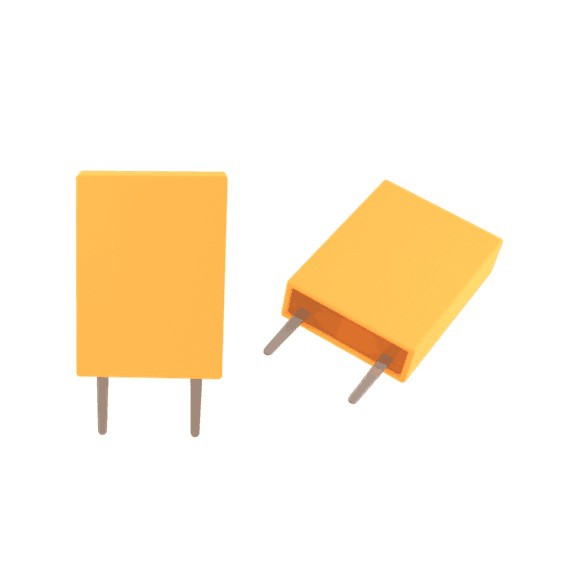

Impedance Characteristics at Different Frequencies
The impedance of a ceramic resonator can be characterized by its impedance curve, which shows how the impedance varies with frequency. The shape of the impedance curve is determined by the physical properties of the resonator, such as its size, shape, and material composition.
- Resonant Frequency: At the resonant frequency, the impedance of the ceramic resonator is at its minimum. This is the frequency at which the resonator is designed to operate, and it is typically specified by the manufacturer. The resonant frequency is determined by the physical dimensions of the resonator and the properties of the ceramic material.
- Anti-Resonant Frequency: The anti-resonant frequency is the frequency at which the impedance of the resonator reaches a maximum. It is slightly higher than the resonant frequency and is also determined by the physical properties of the resonator. At the anti-resonant frequency, the inductive and capacitive reactances are equal and opposite, resulting in a high impedance.
- Bandwidth: The bandwidth of a ceramic resonator is the range of frequencies over which the impedance remains within a certain tolerance of the minimum impedance at the resonant frequency. A wider bandwidth means that the resonator can operate over a broader range of frequencies, which is useful in applications where the frequency may vary.
Factors Affecting Impedance
Several factors can affect the impedance of a ceramic resonator at different frequencies:
- Material Properties: The properties of the ceramic material used in the resonator, such as its dielectric constant and loss tangent, can have a significant impact on its impedance. Different ceramic materials have different electrical properties, which can affect the resonant frequency, bandwidth, and impedance characteristics of the resonator.
- Physical Dimensions: The size and shape of the resonator can also affect its impedance. Smaller resonators generally have higher resonant frequencies and narrower bandwidths, while larger resonators have lower resonant frequencies and wider bandwidths.
- Temperature: The impedance of a ceramic resonator can vary with temperature. This is because the physical properties of the ceramic material, such as its dielectric constant and thermal expansion coefficient, can change with temperature. Temperature compensation techniques can be used to minimize the effect of temperature on the impedance of the resonator.
Importance of Impedance in Electronic Applications
The impedance of a ceramic resonator is an important parameter in electronic applications for several reasons:
- Matching: In order to achieve maximum energy transfer between the resonator and the circuit, the impedance of the resonator must be matched to the impedance of the circuit. This is typically done using impedance matching networks, which can be designed to adjust the impedance of the resonator to match the impedance of the circuit.
- Filtering: Ceramic resonators can be used as filters in electronic circuits to select specific frequencies and reject others. The impedance characteristics of the resonator determine its filtering properties, such as its bandwidth and selectivity.
- Oscillator Design: Ceramic resonators are commonly used in oscillator circuits to generate stable frequencies. The impedance of the resonator affects the stability and performance of the oscillator, and it is important to select a resonator with the appropriate impedance characteristics for the application.
Our Ceramic Resonator Products
As a ceramic resonator supplier, we offer a wide range of products with different impedance characteristics to meet the needs of various electronic applications. Here are some of our popular products:
- Ceramic Resonator with High Stability: This resonator offers high stability and low phase noise, making it ideal for applications where frequency accuracy is critical.
- Small Size SMD Ceramic Resonator HCTA: This compact surface-mount resonator is suitable for applications where space is limited. It has a high resonant frequency and a narrow bandwidth, making it ideal for high-frequency applications.
- SMD Ceramic Resonator HCTB1: This resonator is designed for general-purpose applications and offers a wide range of resonant frequencies and impedance characteristics.
Contact Us for Your Ceramic Resonator Needs
If you're looking for high-quality ceramic resonators with specific impedance characteristics, we're here to help. Our team of experts can assist you in selecting the right resonator for your application and provide you with technical support and guidance. Contact us today to discuss your requirements and start a procurement negotiation.
References
- Smith, R. A. (2002). Electronic Circuits: Discrete and Integrated. John Wiley & Sons.
- Razavi, B. (2017). RF Microelectronics. Prentice Hall.
- Horowitz, P., & Hill, W. (2015). The Art of Electronics. Cambridge University Press.