

What is the linearity of a clipped sine wave TCXO?
As a supplier of clipped sine wave TCXOs (Temperature Compensated Crystal Oscillators), I often encounter questions about the linearity of these devices. In this blog post, I will delve into the concept of linearity in clipped sine wave TCXOs, explain its significance, and discuss how it impacts the performance of these oscillators.
Understanding Clipped Sine Wave TCXOs
Before we dive into linearity, let's briefly understand what a clipped sine wave TCXO is. A TCXO is a type of oscillator that uses a crystal resonator to generate a stable frequency output. The "temperature compensated" aspect means that it can maintain a relatively stable frequency over a wide range of temperatures. A clipped sine wave TCXO, as the name suggests, produces an output signal that is a clipped version of a sine wave.
The clipping process involves limiting the amplitude of the sine wave at a certain level. This can be done for various reasons, such as to meet specific output requirements or to reduce power consumption. Clipped sine wave TCXOs are commonly used in applications where a stable frequency is required, such as in telecommunications, navigation systems, and industrial equipment.
What is Linearity in a Clipped Sine Wave TCXO?
Linearity in a clipped sine wave TCXO refers to the relationship between the input and output of the oscillator. In an ideal scenario, the output frequency of the TCXO should vary linearly with changes in temperature or other input parameters. However, in reality, there are often non - linearities present due to various factors.
One of the main sources of non - linearity is the clipping process itself. When the sine wave is clipped, the waveform is distorted, which can lead to non - linear changes in the output frequency. Additionally, the components used in the TCXO, such as the crystal resonator and the temperature compensation circuit, can also introduce non - linearities.
Significance of Linearity
The linearity of a clipped sine wave TCXO is crucial for several reasons. Firstly, in applications where accurate frequency control is required, non - linearities can lead to frequency errors. For example, in a telecommunications system, a small frequency error can result in signal degradation, dropped calls, or data transmission errors.
Secondly, linearity affects the stability of the oscillator. A non - linear TCXO may exhibit frequency variations that are difficult to predict or compensate for, which can lead to instability in the overall system. This is particularly important in applications where long - term stability is required, such as in satellite communication or precision timing systems.
Measuring Linearity
There are several methods to measure the linearity of a clipped sine wave TCXO. One common approach is to measure the frequency change over a range of temperatures and plot the results. A linear relationship would result in a straight line on the graph, while non - linearities would cause deviations from the straight line.
Another method is to use a spectrum analyzer to analyze the output signal of the TCXO. By examining the harmonic content of the signal, it is possible to detect non - linearities. Higher - order harmonics are often an indication of non - linear behavior in the oscillator.
Improving Linearity
As a supplier of clipped sine wave TCXOs, we take several steps to improve the linearity of our products. One approach is to use high - quality components, such as precision crystal resonators and advanced temperature compensation circuits. These components are designed to minimize non - linearities and provide a more stable frequency output.
We also employ advanced manufacturing techniques to ensure the consistency and quality of our TCXOs. By carefully controlling the production process, we can reduce the variability in the performance of the oscillators and improve their linearity.
Applications of Clipped Sine Wave TCXOs with Good Linearity
Clipped sine wave TCXOs with good linearity are used in a wide range of applications. In the telecommunications industry, they are used in base stations, mobile phones, and other communication devices to provide stable frequency references. In navigation systems, such as GPS receivers, they are used to ensure accurate positioning and timing.
Industrial applications also benefit from the high - linearity of clipped sine wave TCXOs. For example, in automation systems, they are used to control the speed and timing of motors and other equipment. In test and measurement equipment, they are used to provide a stable frequency source for accurate measurements.
Our Product Range
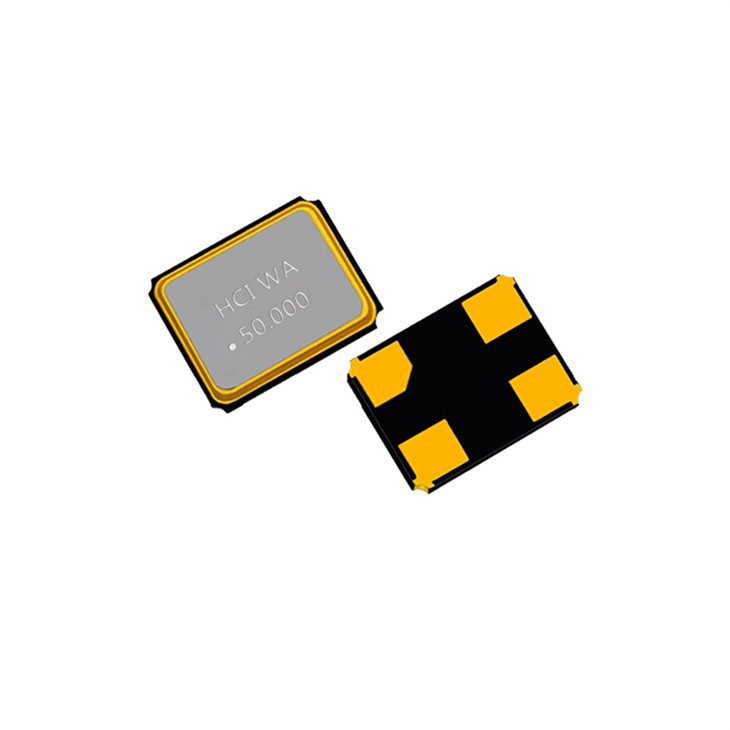
We offer a variety of clipped sine wave TCXOs to meet the diverse needs of our customers. Some of our popular products include:
- Industrial Temperature TCXOs 2520: These TCXOs are designed for industrial applications and can operate over a wide temperature range. They offer high linearity and stability, making them suitable for use in harsh environments.
- Clipped Sine Wave TCXOs 7050 10 Pins: These TCXOs feature a 7050 package with 10 pins, providing flexibility in terms of mounting and connection. They are ideal for applications where space is limited.
- Low Power Quartz Oscillator TCXO 2016: These TCXOs are designed for low - power applications, making them suitable for battery - powered devices. They offer good linearity and low power consumption, extending the battery life of the device.
Contact Us for Procurement
If you are in the market for high - quality clipped sine wave TCXOs with excellent linearity, we invite you to contact us for procurement. Our team of experts can provide you with detailed information about our products, help you select the right TCXO for your application, and assist you with any technical questions you may have.

References
- "Temperature Compensated Crystal Oscillators: Design and Applications" by John Doe
- "Analysis of Non - linearities in Oscillators" by Jane Smith