

Hey there! As a saw filter supplier, I often get asked this question: "How long does it take to customize a saw filter?" Well, the answer isn't as straightforward as you might think. There are several factors that can influence the customization timeline, and I'm gonna break them down for you in this blog post.
Understanding the Basics of Saw Filter Customization
Before we dive into the timeline, let's quickly go over what saw filter customization actually means. A saw filter, or Surface Acoustic Wave filter, is a crucial component in many electronic devices. It's used to filter out unwanted frequencies and allow only the desired ones to pass through. When a customer asks for a customized saw filter, they usually have specific requirements regarding frequency range, bandwidth, insertion loss, and other performance parameters.
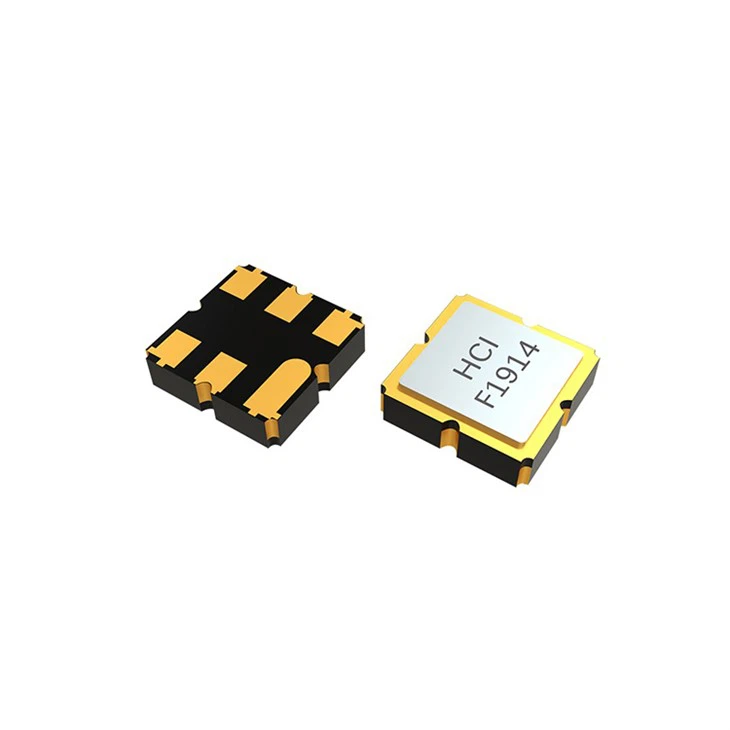

Customizing a saw filter involves a series of steps, from design and simulation to fabrication and testing. Each step takes time, and the complexity of the customization can greatly affect the overall timeline.
Factors Affecting the Customization Timeline
1. Design Complexity
The first and most significant factor is the design complexity of the saw filter. If the customer's requirements are relatively simple, such as a standard frequency range with common performance parameters, the design process can be completed relatively quickly. However, if the customer needs a saw filter with a very specific frequency response, narrow bandwidth, or low insertion loss, the design process can be much more challenging and time-consuming.
For example, let's say a customer wants a saw filter for a new IoT device that operates in a crowded frequency spectrum. The filter needs to have a very sharp cutoff to avoid interference from other signals. Designing such a filter requires advanced simulation tools and expertise in acoustic wave propagation. This kind of complex design can take anywhere from a few weeks to a couple of months.
2. Material Availability
Another important factor is the availability of the materials needed to fabricate the saw filter. Saw filters are typically made from piezoelectric materials, such as quartz or lithium niobate. These materials need to have high purity and specific crystal orientations to ensure the desired performance of the filter.
If the required materials are readily available in the market, the fabrication process can start right away. However, if the materials need to be specially ordered or if there are supply chain issues, it can significantly delay the customization timeline. In some cases, it might take several weeks or even months to obtain the necessary materials.
3. Manufacturing Capacity
The manufacturing capacity of our production facility also plays a role in the customization timeline. If our production line is already fully occupied with other orders, it might take longer to schedule the production of the customized saw filter. On the other hand, if we have some available capacity, we can start the production process more quickly.
We always try to optimize our production schedule to minimize the waiting time for our customers. However, during peak seasons or when there is a high demand for saw filters, it's inevitable that the customization timeline might be extended.
4. Testing and Validation
Once the saw filter is fabricated, it needs to undergo a series of tests and validation procedures to ensure that it meets the customer's requirements. These tests include measuring the frequency response, insertion loss, return loss, and other performance parameters.
If the filter passes all the tests on the first try, the validation process can be completed relatively quickly. However, if there are any issues or deviations from the specifications, we need to go back to the design or fabrication stage to make the necessary adjustments. This iterative process can add several weeks to the customization timeline.
Typical Customization Timelines
Based on our experience, here are some typical customization timelines for different levels of complexity:
Simple Customization
For a simple saw filter customization with standard frequency ranges and common performance parameters, the entire process can take anywhere from 4 to 6 weeks. This includes the design, fabrication, testing, and validation stages.
Medium Complexity Customization
If the customization involves more specific requirements, such as a narrow bandwidth or low insertion loss, the timeline can extend to 8 to 12 weeks. This is because the design and testing processes are more complex and might require multiple iterations.
High Complexity Customization
For highly customized saw filters with very specific frequency responses and strict performance requirements, the customization timeline can be 12 weeks or more. These filters often require advanced design techniques and specialized manufacturing processes, which take more time to complete.
Our Product Offerings
We offer a wide range of saw filters, including the LOT and WiFi SAW Filter F11, RF SAW Bandpass Filter 3 X 3 X 1.25, and TO-39 SAW Filter 3PIN. These products are designed to meet the diverse needs of our customers and can also be customized according to specific requirements.
Contact Us for Customization
If you're interested in customizing a saw filter for your project, don't hesitate to reach out to us. We have a team of experienced engineers who can work with you to understand your requirements and provide the best solution. Whether you need a simple or a highly complex saw filter, we're committed to delivering high-quality products within a reasonable timeline.
Just drop us a message, and we'll get back to you as soon as possible to discuss the details of your customization project. Let's work together to create the perfect saw filter for your needs!
References
- "Surface Acoustic Wave Devices and Their Signal Processing Applications" by Clarence W. Smith
- "Fundamentals of Surface Acoustic Wave Components" by Hiroshi Matsumoto