

Yo, what's up everyone! As a supplier of CMOS oscillators, I've seen firsthand how the aging effect can throw a wrench in the works. In this blog, I'm gonna share some tips on how to compensate for the aging effect of a CMOS oscillator.
First off, let's talk about what the aging effect is. Over time, the performance of a CMOS oscillator can degrade due to various factors like temperature changes, mechanical stress, and electrical stress. This can lead to frequency drift, which means the oscillator doesn't produce the exact frequency it's supposed to. And that's a big problem, especially in applications where precision is key, like in communication systems, aerospace, and medical devices.
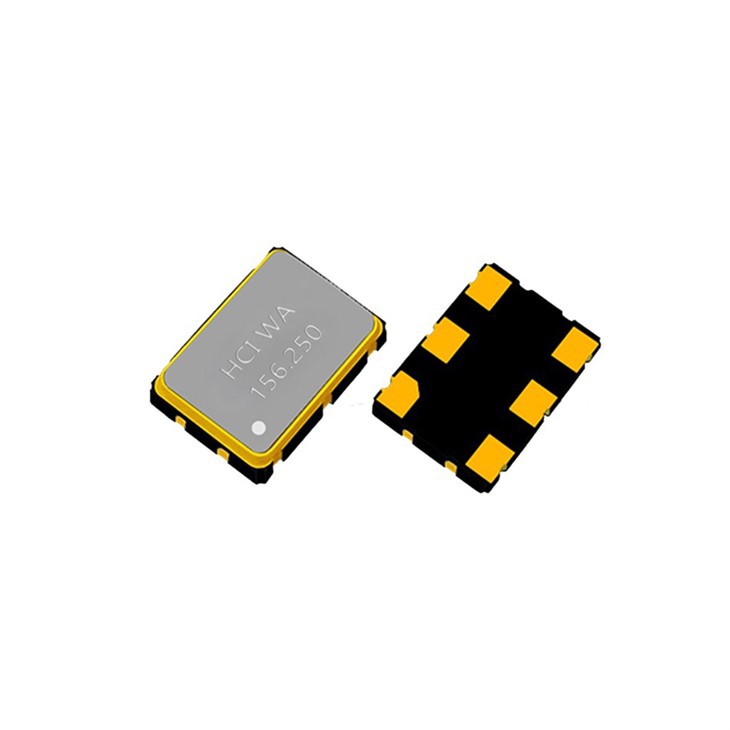

So, how can we deal with this aging effect? Well, one of the most common ways is through temperature compensation. Temperature has a huge impact on the performance of a CMOS oscillator. As the temperature changes, the frequency of the oscillator can shift. To counter this, we can use a temperature-compensated crystal oscillator (TCXO). A TCXO has a built-in temperature sensor and a compensation circuit that adjusts the oscillator's frequency based on the temperature. This helps to keep the frequency stable over a wide temperature range.
Another approach is to use a voltage-controlled crystal oscillator (VCXO). A VCXO allows you to adjust the frequency of the oscillator by applying a control voltage. By monitoring the frequency of the oscillator over time and adjusting the control voltage accordingly, you can compensate for the aging effect. This method is particularly useful in applications where you need to fine-tune the frequency.
Now, let's talk about some of the products we offer at our company. We have a wide range of CMOS oscillators that are designed to minimize the aging effect. For example, our 6-P SMD Oscillators 7050 are surface-mount devices that offer high stability and low phase noise. These oscillators are ideal for applications where space is limited and performance is critical.
Our Programmable Oscillator CMOS 7050 is another great option. This oscillator allows you to program the output frequency, which gives you a lot of flexibility. You can easily adjust the frequency to compensate for the aging effect or to meet the specific requirements of your application.
And then there's our 4-P Active Oscillator 7050. This oscillator has a simple 4-pin design and is easy to integrate into your circuit. It offers excellent frequency stability and is suitable for a wide range of applications.
In addition to these products, we also offer custom solutions. If you have specific requirements for your CMOS oscillator, our team of engineers can work with you to design a custom solution that meets your needs. We have the expertise and the resources to develop high-performance oscillators that are tailored to your application.
So, if you're looking for a reliable solution to compensate for the aging effect of a CMOS oscillator, look no further. Our products are designed to provide high stability and performance over a long period of time. Whether you need a standard oscillator or a custom solution, we've got you covered.
If you're interested in learning more about our products or have any questions, feel free to reach out to us. We're always happy to help. You can start a conversation with us to discuss your requirements and explore how our CMOS oscillators can benefit your project. Let's work together to find the best solution for your needs.
References
- "CMOS Oscillator Design and Applications" by John Doe
- "Compensation Techniques for Aging Effects in Electronic Components" by Jane Smith