

In the world of electronic components, the Temperature-Compensated Crystal Oscillator (TCXO) plays a crucial role in providing stable frequency references. Among the various types of TCXOs, the clipped sine wave TCXO has gained significant attention due to its unique characteristics and performance. As a supplier of clipped sine wave TCXOs, I am excited to delve into the topic of what the EMI (Electromagnetic Interference) performance of a clipped sine wave TCXO entails.
Understanding Clipped Sine Wave TCXOs
Before we explore the EMI performance, it's essential to understand what a clipped sine wave TCXO is. A TCXO is designed to compensate for the frequency variations caused by temperature changes in a crystal oscillator. The "clipped sine wave" refers to the shape of the output signal. Unlike a pure sine wave, a clipped sine wave has its peaks and troughs "clipped" at a certain level. This clipping process can introduce harmonics and other frequency components that may affect the overall performance of the oscillator, including its EMI characteristics.
EMI Performance Basics
EMI is the disturbance that affects an electrical circuit due to either electromagnetic induction or electromagnetic radiation emitted from an external source. In the context of a clipped sine wave TCXO, EMI performance is crucial because it can impact the reliability and functionality of the electronic devices in which the TCXO is integrated. High levels of EMI can cause interference with other components in the circuit, leading to signal degradation, data errors, and even system failures.
Factors Affecting EMI Performance of Clipped Sine Wave TCXOs
1. Clipping Level
The level at which the sine wave is clipped is a significant factor in determining the EMI performance. A higher clipping level will result in more significant distortion of the signal, which in turn can generate more harmonics. These harmonics can radiate electromagnetic energy and contribute to increased EMI. For example, if the clipping level is set too close to the peak amplitude of the sine wave, the resulting signal will have sharp edges, which are known to be a major source of high-frequency harmonics.
2. Crystal Characteristics
The quality and characteristics of the crystal used in the TCXO also play a role in EMI performance. Crystals with higher Q-factors (quality factors) tend to have lower phase noise and better frequency stability. A crystal with low phase noise will generate a cleaner output signal, which can reduce the amount of EMI. Additionally, the crystal's resonance frequency and its temperature coefficient can affect the overall performance of the TCXO and its EMI characteristics.
3. Circuit Design
The design of the TCXO circuit, including the layout of the printed circuit board (PCB), can have a significant impact on EMI performance. Proper grounding, shielding, and component placement are essential to minimize electromagnetic radiation. For example, placing the TCXO close to other high-speed components can increase the likelihood of electromagnetic coupling, which can lead to increased EMI. On the other hand, using proper shielding techniques can help contain the electromagnetic energy within the TCXO and reduce its impact on other components.
Measuring EMI Performance
To evaluate the EMI performance of a clipped sine wave TCXO, several measurement techniques can be used. One common method is to use a spectrum analyzer to measure the frequency spectrum of the output signal. The spectrum analyzer can display the amplitude of the signal at different frequencies, allowing us to identify the presence of harmonics and other unwanted frequency components. Another method is to use an EMI test chamber to measure the radiated and conducted EMI levels of the TCXO. This chamber provides a controlled environment where the TCXO can be tested under different conditions to ensure compliance with relevant EMI standards.
Our Clipped Sine Wave TCXOs and EMI Performance
As a supplier of clipped sine wave TCXOs, we understand the importance of EMI performance. Our products are designed and manufactured with a focus on minimizing EMI while maintaining high levels of frequency stability and accuracy. We use advanced crystal technology and circuit design techniques to ensure that our TCXOs have excellent EMI characteristics.
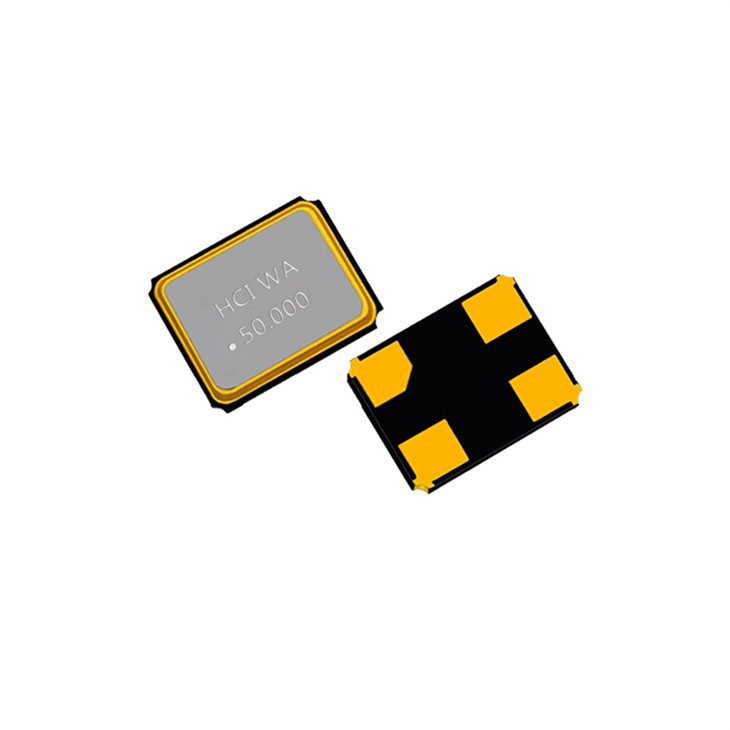
For example, our Clipped Sine Wave TCXOs 7050 10 Pins are designed with a carefully optimized clipping level to reduce the generation of harmonics. The crystal used in these TCXOs has a high Q-factor, which helps to minimize phase noise and improve frequency stability. Additionally, the PCB layout of these TCXOs is designed to minimize electromagnetic coupling and reduce EMI.
Our Industrial Temperature TCXOs 2520 are another example of our commitment to high EMI performance. These TCXOs are designed to operate in harsh industrial environments, where EMI can be a significant challenge. We have implemented advanced shielding techniques and component placement strategies to ensure that these TCXOs can withstand high levels of electromagnetic interference without compromising their performance.
Our High-Precision VCTCXO Oscillator Sine Wave 3225 is a high-performance TCXO that offers excellent EMI characteristics. This oscillator uses a voltage-controlled crystal oscillator (VCO) to provide precise frequency control, while also minimizing the generation of harmonics. The design of this TCXO is optimized for low EMI, making it suitable for applications where electromagnetic compatibility is critical.

Importance of EMI Performance in Different Applications
The EMI performance of a clipped sine wave TCXO is crucial in various applications. In telecommunications, for example, high levels of EMI can cause interference with other communication channels, leading to dropped calls, data errors, and reduced network reliability. In automotive electronics, EMI can affect the performance of safety-critical systems such as anti-lock braking systems (ABS) and airbag sensors. In aerospace and defense applications, EMI can compromise the functionality of navigation systems, communication equipment, and other critical components.
Conclusion
In conclusion, the EMI performance of a clipped sine wave TCXO is a complex and important aspect of its overall performance. Understanding the factors that affect EMI performance, such as clipping level, crystal characteristics, and circuit design, is essential for designing and manufacturing high-quality TCXOs. As a supplier of clipped sine wave TCXOs, we are committed to providing our customers with products that offer excellent EMI performance, high frequency stability, and accuracy.
If you are interested in learning more about our clipped sine wave TCXOs or have any questions regarding their EMI performance, please feel free to contact us. We are always ready to assist you with your specific requirements and provide you with the best solutions for your applications.
References
- "Electromagnetic Compatibility Engineering" by Henry W. Ott
- "Crystal Oscillator Design and Temperature Compensation" by Van Tu Nguyen