

Surface Acoustic Wave (SAW) filters are integral components in modern communication systems, offering high performance in frequency filtering with compact size and low cost. As a SAW filter supplier, we understand the importance of protecting these delicate devices from various environmental factors to ensure their optimal performance and longevity. In this blog, we will explore the common environmental challenges that SAW filters face and provide practical strategies to safeguard them.
Common Environmental Factors Affecting SAW Filters
Temperature
Temperature fluctuations can significantly impact the performance of SAW filters. Extreme temperatures, either high or low, can cause changes in the physical properties of the piezoelectric material used in SAW filters. At high temperatures, the material may expand, leading to a shift in the resonant frequency of the filter. Conversely, low temperatures can cause contraction, also resulting in frequency variations. These frequency shifts can degrade the filter's performance, leading to signal loss and interference.

Humidity
Humidity is another critical environmental factor. Moisture can penetrate the protective packaging of SAW filters and cause corrosion of the electrodes and other internal components. Corrosion can increase the resistance of the electrodes, leading to signal attenuation and reduced filter efficiency. Moreover, water molecules can also affect the piezoelectric properties of the material, altering the filter's frequency response.
Vibration and Shock
SAW filters are sensitive to mechanical vibrations and shocks. These mechanical forces can cause physical damage to the delicate structures within the filter, such as the interdigital transducers (IDTs). Even minor damage to the IDTs can disrupt the generation and propagation of surface acoustic waves, resulting in degraded filter performance.
Electromagnetic Interference (EMI)
In today's electromagnetic - rich environment, SAW filters are vulnerable to EMI. External electromagnetic fields can couple into the filter and interfere with the normal operation of the surface acoustic waves. This interference can manifest as increased noise in the output signal, reduced signal - to - noise ratio, and distorted frequency response.
Strategies to Protect SAW Filters from Environmental Factors
Temperature Management
- Thermal Design: When designing the system that incorporates SAW filters, proper thermal management is crucial. This can include the use of heat sinks, thermal pads, and fans to dissipate heat effectively. For applications in high - temperature environments, heat - resistant materials can be used in the packaging of SAW filters.
- Temperature Compensation: Some advanced SAW filters are equipped with temperature compensation circuits. These circuits can adjust the filter's electrical parameters in response to temperature changes, maintaining a stable frequency response over a wide temperature range.
Humidity Protection
- Hermetic Packaging: Hermetic packaging is an effective way to protect SAW filters from moisture. By sealing the filter in a hermetic enclosure, moisture is prevented from entering and causing damage. This type of packaging is commonly used in high - reliability applications.
- Desiccants: The use of desiccants within the packaging can also help absorb any moisture that may enter the enclosure. Desiccants are substances that have a high affinity for water and can keep the internal environment of the package dry.
Vibration and Shock Resistance
- Mechanical Isolation: To reduce the impact of vibrations and shocks, SAW filters can be mounted on vibration - isolating materials. These materials can absorb and dampen the mechanical energy, preventing it from reaching the filter. For example, rubber mounts or foam pads can be used to isolate the filter from the surrounding structure.
- Robust Packaging Design: The packaging of SAW filters can be designed to be more robust. This can include using stronger materials and improving the internal support structures to withstand mechanical forces.
EMI Shielding
- Shielding Enclosures: A common approach to protect SAW filters from EMI is to use shielding enclosures. These enclosures are made of conductive materials, such as metal, and can block external electromagnetic fields from reaching the filter. The shielding enclosure should be properly grounded to ensure its effectiveness.
- Filter Placement: Careful placement of SAW filters within the system can also reduce the impact of EMI. Filters should be placed away from sources of electromagnetic interference, such as power supplies and high - frequency circuits.
Our SAW Filter Products and Their Environmental Resistance
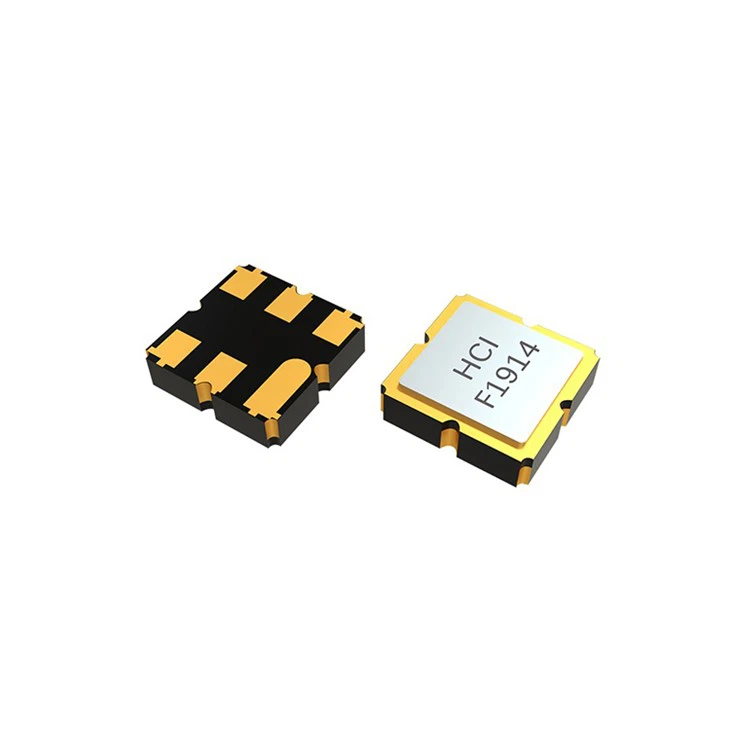
As a SAW filter supplier, we offer a wide range of high - quality SAW filters, including the RF SAW Bandpass Filter 3 X 3 X 1.25, Wideband SAW Filter 3.8x3.8mm, and High Frequency Saw Filter 5050.
Our SAW filters are designed with environmental protection in mind. They are packaged using advanced hermetic or semi - hermetic techniques to protect against humidity and moisture. The packaging materials are also selected for their thermal and mechanical properties, providing good temperature resistance and vibration/shock resistance. Additionally, our filters can be equipped with EMI shielding options to ensure reliable operation in electromagnetic - rich environments.
Conclusion
Protecting SAW filters from environmental factors is essential for maintaining their performance and reliability. By understanding the common environmental challenges and implementing appropriate protection strategies, we can ensure that SAW filters operate effectively in various applications. As a SAW filter supplier, we are committed to providing high - quality products with excellent environmental resistance. If you are interested in our SAW filter products for your specific application, we invite you to contact us for procurement and further technical discussions. We look forward to working with you to meet your frequency filter needs.
References
- Smith, J. (2018). Surface Acoustic Wave Devices and Their Signal Processing Applications. Academic Press.
- Jones, A. (2020). Environmental Effects on Electronic Components. Wiley - IEEE Press.
- Brown, C. (2019). Thermal Management in Electronic Systems. McGraw - Hill Education.