

What is the frequency accuracy of saw filters?
Hey there! I'm a supplier of SAW filters, and I'm stoked to chat with you about the frequency accuracy of these nifty devices. SAW, which stands for Surface Acoustic Wave, filters are super important in the world of electronics, especially when it comes to things like wireless communication.
Let's start with the basics. Frequency accuracy in SAW filters is all about how close the actual operating frequency of the filter is to the desired or specified frequency. It's a crucial factor because it directly affects the performance of the overall system where the SAW filter is used.
Think about it this way. In a wireless device, say a smartphone, the SAW filter helps to select the right frequencies and block out unwanted ones. If the frequency accuracy is off, it can lead to all sorts of problems. For example, you might experience poor signal quality, interference, or even complete loss of communication.
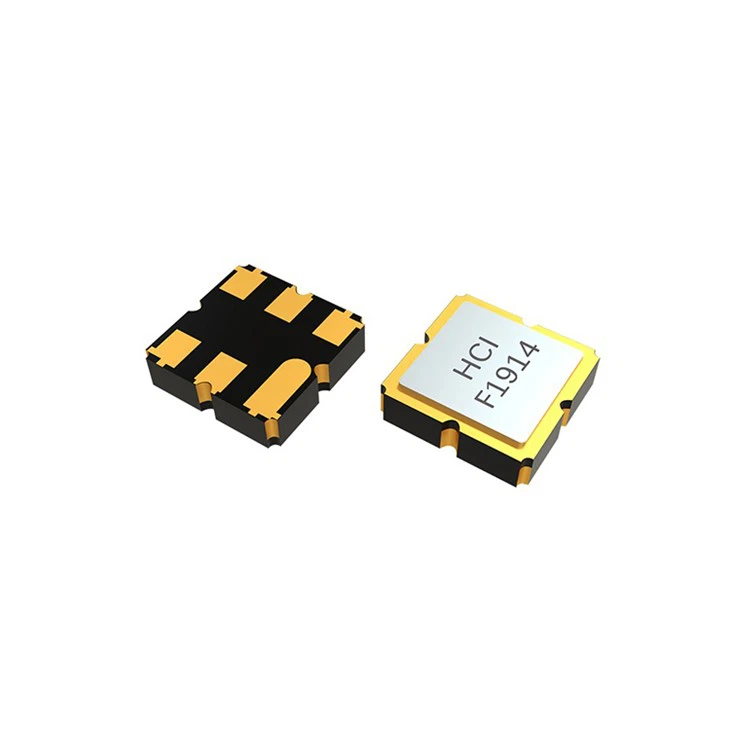

Now, how is frequency accuracy measured? Well, it's usually expressed in terms of parts per million (ppm). A lower ppm value means higher frequency accuracy. For instance, if a SAW filter has a frequency accuracy of ±20 ppm, it means that the actual operating frequency can deviate from the specified frequency by up to 20 parts per million. That might not sound like much, but in the world of high - frequency electronics, it can make a big difference.
There are several factors that can affect the frequency accuracy of SAW filters. One of the main factors is temperature. SAW filters are sensitive to temperature changes. As the temperature goes up or down, the physical properties of the materials used in the filter can change, which in turn affects the frequency. To combat this, manufacturers often use temperature - compensated SAW (TC - SAW) filters. These filters are designed to minimize the frequency shift caused by temperature variations.
Another factor is the manufacturing process. The precision of the manufacturing process plays a huge role in determining the frequency accuracy. Any small errors or inconsistencies during the fabrication of the SAW filter can lead to deviations in the frequency. That's why at our company, we use state - of - the - art manufacturing techniques and quality control measures to ensure high - quality SAW filters with excellent frequency accuracy.
Let's talk about some of the specific SAW filters we offer. We have the LOT and WiFi SAW Filter F11. This filter is designed for applications in the LOT and WiFi frequency bands. It has a very high frequency accuracy, which makes it ideal for reliable wireless communication. Whether you're building a smart home device or a wireless sensor network, this filter can help you get the job done right.
Then there's the RF SAW Bandpass Filter 3 X 3 X 1.25. This filter is great for RF applications. It has a compact size, which is perfect for space - constrained designs. And of course, it offers excellent frequency accuracy, ensuring that your RF system operates smoothly.
We also have the High Frequency Saw Filter 5050. As the name suggests, this filter is designed for high - frequency applications. It can handle frequencies in the gigahertz range with great accuracy, making it suitable for advanced wireless communication systems.
When it comes to choosing a SAW filter, frequency accuracy is just one of the factors to consider. You also need to think about things like insertion loss, bandwidth, and power handling. But frequency accuracy is definitely a key consideration, especially if you need a reliable and high - performance filter.
If you're in the market for SAW filters, we'd love to have a chat with you. Whether you're a small startup working on a new wireless product or a large corporation looking for high - volume production, we can provide you with the right SAW filters to meet your needs. Our team of experts is always ready to help you select the best filter for your application and answer any questions you might have.
So, if you're interested in learning more about our SAW filters or want to discuss a potential purchase, don't hesitate to reach out. We're here to make the process as easy and straightforward as possible for you.
References:
- "Surface Acoustic Wave Devices and Their Signal Processing Applications" by H. Matthew Reynolds
- "RF and Microwave Filter Design Handbook" by Richard M. Barrett, William H. Curtice, Paul C. Navid, and R. J. Trew