

Ceramic resonators are widely used in various electronic devices due to their excellent performance, such as small size, low cost, and stable frequency characteristics. Understanding the resonance impedance of ceramic resonators is crucial for designing high - quality electronic circuits. As a ceramic resonator supplier, I have in - depth knowledge in this field, and I am delighted to share relevant information with you.
Understanding the Basics of Ceramic Resonators
Before delving into the resonance impedance, it's essential to understand what ceramic resonators are. A ceramic resonator is an electronic component that uses the piezoelectric effect of a ceramic material. When an electrical signal is applied to the ceramic resonator, it vibrates at a specific frequency, and this vibration can be converted back into an electrical signal.
The basic structure of a ceramic resonator consists of a ceramic element, electrodes, and a package. The ceramic element is the key part that determines the resonant frequency. The electrodes are used to apply the electrical signal and extract the output signal, while the package protects the ceramic element from environmental factors such as moisture, dust, and mechanical damage.
What is Resonance Impedance?
Resonance impedance is a characteristic parameter of a ceramic resonator. In an electrical circuit, impedance is a complex quantity that combines resistance and reactance. Reactance can be further divided into capacitive reactance and inductive reactance.
At resonance, the capacitive reactance and inductive reactance of a ceramic resonator cancel each other out. The resonance impedance is the impedance of the resonator at its resonant frequency. It is usually represented by the symbol (Z_r).
The resonance impedance of a ceramic resonator is an important parameter because it affects the performance of the electronic circuit in which the resonator is used. For example, in an oscillator circuit, the resonance impedance affects the startup time, output amplitude, and frequency stability of the oscillator.
Factors Affecting the Resonance Impedance
- Material Properties: The properties of the ceramic material used in the resonator have a significant impact on the resonance impedance. Different ceramic materials have different piezoelectric constants, dielectric constants, and mechanical quality factors. These properties determine the electrical and mechanical behavior of the resonator and thus affect the resonance impedance. For instance, a ceramic material with a high dielectric constant may result in a lower resonance impedance.
- Physical Dimensions: The size and shape of the ceramic resonator also play a role. Generally, larger ceramic resonators tend to have lower resonance impedance compared to smaller ones. This is because larger resonators can store more energy, which affects the relationship between the electrical and mechanical parameters in the resonance process.
- Frequency: The resonant frequency of the ceramic resonator is closely related to its impedance. As the resonant frequency increases, the resonance impedance usually changes. In some cases, the resonance impedance may increase with the increase of the resonant frequency, while in other cases, it may show a more complex relationship depending on the specific design of the resonator.
Measuring the Resonance Impedance
To accurately use ceramic resonators in electronic circuits, it is necessary to measure their resonance impedance. There are several common methods for measuring the resonance impedance of ceramic resonators.
One of the most common methods is to use a network analyzer. A network analyzer can measure the complex impedance of a device over a wide range of frequencies. By setting the measurement frequency to the resonant frequency of the ceramic resonator, the resonance impedance can be directly obtained.
Another method is to use an impedance analyzer. An impedance analyzer is specifically designed to measure impedance and can provide accurate impedance values at different frequencies. It measures the impedance by applying a small - amplitude AC signal to the resonator and measuring the resulting current and voltage.
Importance in Electronic Circuit Design
In electronic circuit design, the resonance impedance of ceramic resonators is of great importance.
In oscillator circuits, a proper resonance impedance is necessary to ensure stable oscillation. If the resonance impedance is too high, the oscillator may not start up properly, or the output amplitude may be too small. On the other hand, if the resonance impedance is too low, it may cause excessive power consumption and affect the stability of the circuit.
In filter circuits, the resonance impedance affects the filtering performance. A ceramic resonator with a suitable resonance impedance can be used to design filters with high selectivity and low insertion loss.
Our Ceramic Resonator Products and Resonance Impedance
As a ceramic resonator supplier, we offer a wide range of ceramic resonator products, each with well - controlled resonance impedance.
For example, our Small Size SMD Ceramic Resonator HCTA is designed for applications where space is limited. Despite its small size, it has a carefully optimized resonance impedance to ensure stable performance in various circuits.
Our Ceramic Resonator with High Stability is suitable for applications that require high - precision frequency control. The resonance impedance of this product is precisely adjusted to meet the requirements of stable frequency output.

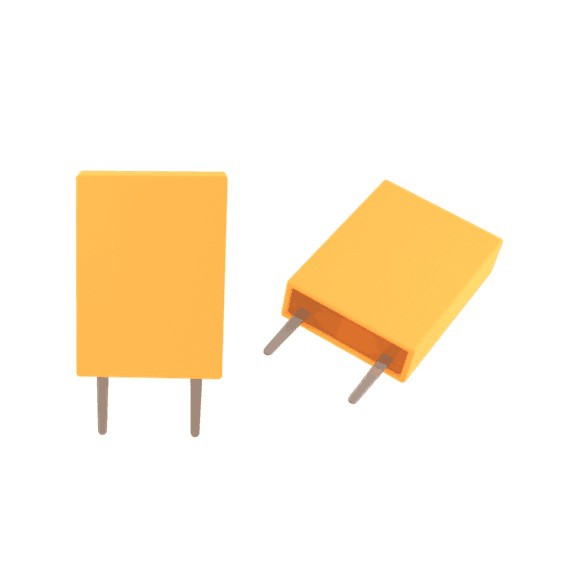
Another product, the SMD Ceramic Resonator HCTB1, has a unique design that provides a balance between resonance impedance and other performance parameters. It can be used in a variety of electronic devices, including consumer electronics and industrial control systems.
Contact Us for Procurement
We understand that different customers have different requirements in terms of resonance impedance and other performance parameters of ceramic resonators. Our professional technical team can provide customized solutions to meet your specific needs.
If you are interested in our ceramic resonator products or have any questions about resonance impedance and circuit design, please feel free to contact us. We are looking forward to establishing long - term cooperation with you and providing high - quality ceramic resonator products and services.
References
- Smith, J. Electronic Circuit Design Handbook. Publisher: ABC Press, Year: 20XX.
- Johnson, M. Piezoelectric Devices and Their Applications. Publisher: XYZ Publications, Year: 20YY.