

Hey there! As a supplier of CMOS oscillators, I'm super excited to dive into the world of transistors and their role in CMOS oscillators. Let's get started!
First off, what's a CMOS oscillator? Well, it's a type of electronic oscillator that uses complementary metal - oxide - semiconductor (CMOS) technology. These oscillators are widely used in all sorts of electronic devices, from smartphones and computers to industrial equipment.
Now, let's talk about transistors. Transistors are the building blocks of modern electronics. They're like the little switches that control the flow of electricity in a circuit. In a CMOS oscillator, transistors play several crucial roles.
Amplification
One of the main roles of transistors in a CMOS oscillator is amplification. You see, an oscillator needs to generate a continuous, stable signal. But the initial signal is usually very weak. That's where transistors come in. They take that weak input signal and boost it to a much stronger output signal.
For example, in a simple CMOS oscillator circuit, the transistors amplify the small voltage variations that occur due to the feedback mechanism. This amplification is essential for maintaining the oscillation. Without it, the signal would die out quickly, and the oscillator wouldn't work.
Switching
Transistors in a CMOS oscillator also act as switches. They can turn the current on and off very quickly. This switching action is what allows the oscillator to generate a periodic signal.
In a CMOS oscillator, the transistors alternate between two states: on and off. When a transistor is on, it allows current to flow through it. When it's off, the current is blocked. By rapidly switching between these two states, the transistors create a square - wave or sinusoidal signal, depending on the design of the oscillator.
Frequency Control
Another important role of transistors in a CMOS oscillator is frequency control. The frequency of an oscillator is the number of times the signal repeats per second. Transistors can be used to adjust this frequency.
By changing the characteristics of the transistors, such as their gain or the biasing voltage, we can control the frequency of the oscillator. For instance, increasing the gain of a transistor can increase the frequency of the oscillation. This is crucial because different applications require different frequencies.
Feedback
Feedback is a key concept in oscillator design. In a CMOS oscillator, transistors are used to provide the necessary feedback. Feedback is what keeps the oscillator going. It takes a portion of the output signal and feeds it back to the input.
The transistors in the oscillator circuit ensure that the feedback is in the right phase and amplitude. If the feedback is not correct, the oscillator may not start or may not maintain a stable oscillation.

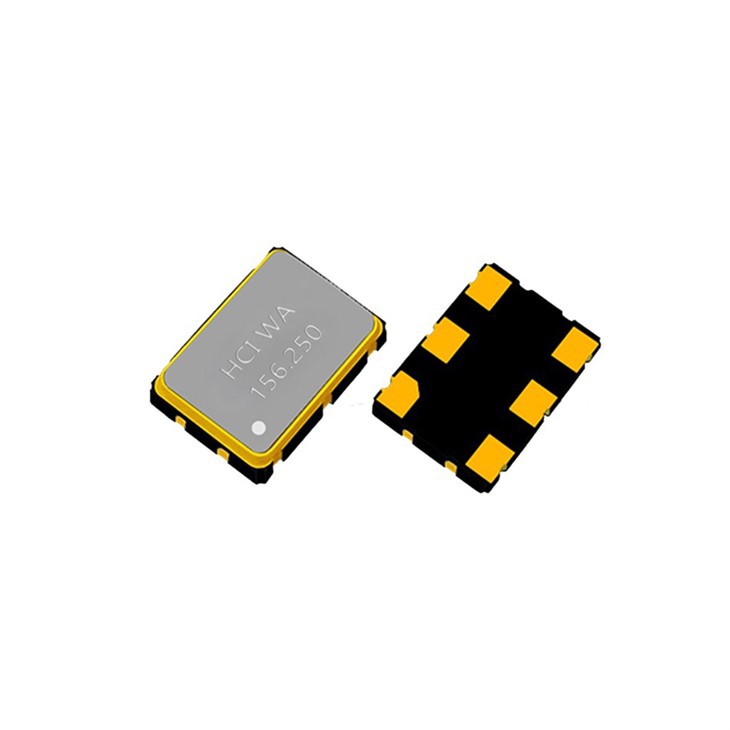
Our CMOS Oscillator Products
At our company, we offer a wide range of CMOS oscillators. For example, we have the 4 - P Active Oscillator 7050. This oscillator is known for its high stability and low phase noise. It's suitable for a variety of applications, including communication systems and test equipment.
We also have the 6 - P SMD Oscillators 7050. These surface - mount devices are compact and easy to integrate into circuit boards. They offer excellent performance and reliability.
And then there's the TXO SMD Oscillator 2016. This oscillator is designed for applications where space is limited. It provides a stable frequency output in a small package.
Why Choose Our CMOS Oscillators?
Our CMOS oscillators are designed with high - quality transistors. These transistors are carefully selected to ensure optimal performance. They offer excellent amplification, switching, and frequency control capabilities.
We also pay close attention to the feedback mechanism in our oscillators. This ensures that the oscillators can generate stable and accurate signals. Whether you need a high - frequency oscillator for a wireless communication system or a low - frequency oscillator for a consumer electronics device, we've got you covered.
Let's Talk Business
If you're in the market for CMOS oscillators, we'd love to have a chat with you. Our team of experts can help you choose the right oscillator for your specific needs. We can also provide technical support and customization options.
Whether you're a small startup or a large corporation, we're committed to providing you with the best products and services. So, don't hesitate to reach out to us. Let's start a conversation and see how we can work together to meet your requirements.
References
- Razavi, B. (2017). Design of Analog CMOS Integrated Circuits. McGraw - Hill Education.
- Horowitz, P., & Hill, W. (2015). The Art of Electronics. Cambridge University Press.