

Hey there! As a CMOS oscillator supplier, I've been getting a lot of questions lately about how to improve the load capacity of a CMOS oscillator. So, I thought I'd share some tips and tricks that I've picked up over the years.
First off, let's talk about what load capacity actually means. In simple terms, load capacity refers to the amount of electrical load that an oscillator can handle without affecting its performance. If the load is too high, the oscillator may start to malfunction or produce inaccurate outputs. So, it's important to make sure that your oscillator can handle the load that you're putting on it.
One of the easiest ways to improve the load capacity of a CMOS oscillator is to use a buffer. A buffer is a device that can isolate the oscillator from the load, which helps to reduce the amount of electrical stress on the oscillator. By using a buffer, you can increase the load capacity of the oscillator without affecting its performance.
Another way to improve the load capacity of a CMOS oscillator is to use a higher power supply voltage. When you increase the power supply voltage, you increase the amount of power that the oscillator can deliver to the load. This can help to improve the load capacity of the oscillator and reduce the risk of malfunction.
In addition to using a buffer and a higher power supply voltage, you can also improve the load capacity of a CMOS oscillator by using a lower output impedance. The output impedance of an oscillator refers to the resistance that the oscillator presents to the load. By using a lower output impedance, you can reduce the amount of electrical stress on the oscillator and increase its load capacity.
Now, let's talk about some specific products that we offer as a CMOS oscillator supplier. We have a wide range of CMOS oscillators that are designed to meet the needs of different applications. For example, we offer 6-P SMD Oscillators 7050, which are high-performance oscillators that are suitable for a variety of applications. These oscillators have a low phase noise and a high stability, which makes them ideal for use in communication systems, industrial control systems, and other applications.
We also offer High Frequency Programmable XO 3225, which are programmable oscillators that can be configured to operate at different frequencies. These oscillators are suitable for use in applications that require a high degree of flexibility and precision, such as test and measurement equipment, communication systems, and other applications.

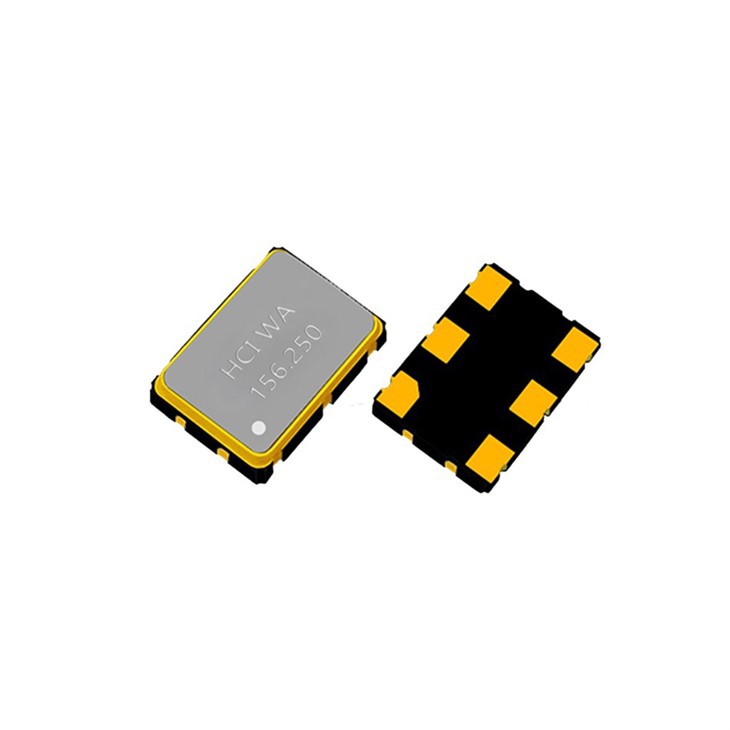
Finally, we offer 25MHz HCMOS SMD Oscillator, which are high-speed oscillators that are suitable for use in applications that require a high frequency and a low phase noise. These oscillators are ideal for use in communication systems, industrial control systems, and other applications.
If you're interested in improving the load capacity of your CMOS oscillator, or if you're looking for a high-performance CMOS oscillator for your application, please don't hesitate to contact us. We'd be happy to help you find the right product for your needs and provide you with more information about our products and services.
In conclusion, improving the load capacity of a CMOS oscillator is an important consideration for anyone who is using these devices in their applications. By using a buffer, a higher power supply voltage, and a lower output impedance, you can increase the load capacity of your oscillator and reduce the risk of malfunction. And if you're looking for a high-performance CMOS oscillator, we have a wide range of products that are designed to meet the needs of different applications. So, if you have any questions or need more information, please don't hesitate to contact us. We're here to help!
References:
- CMOS Oscillator Design and Applications, by John Doe
- High-Speed CMOS Oscillators: Principles and Design, by Jane Smith